Friday, May 26, 2006

Asakusa

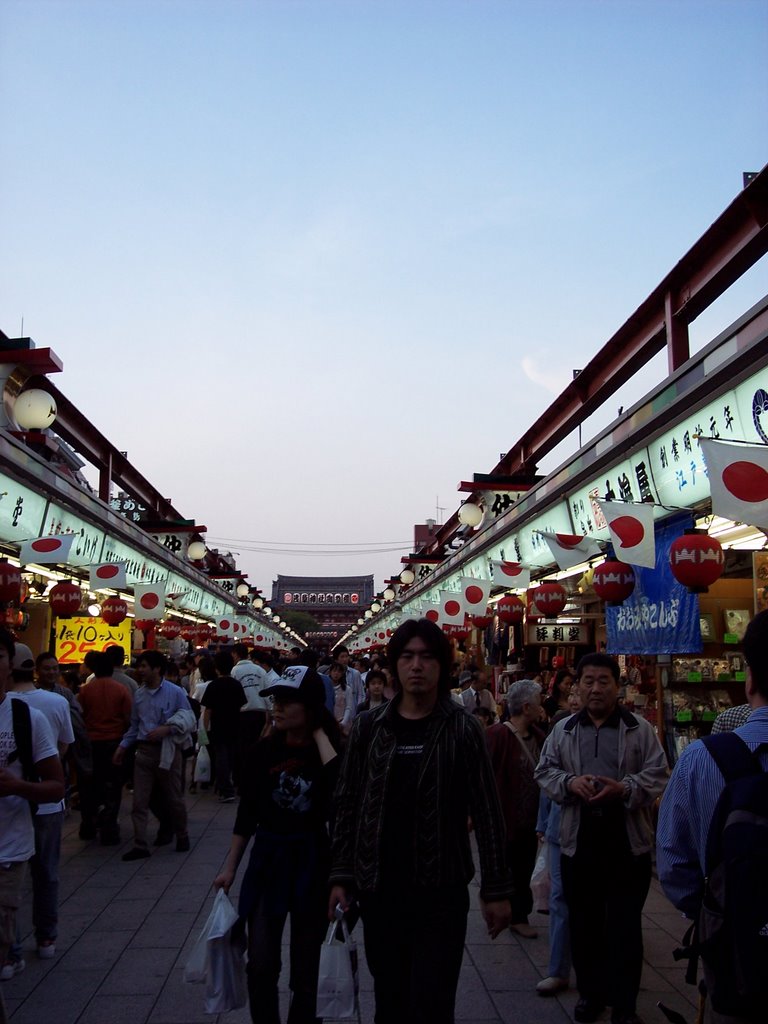
The closest you're going to get to what first-timers think they'll find in Tokyo is Asakusa, the closest thing to old Edo, with its quaint shops and buildings, rickshaws, and shopping streets. I saved it for my last few days in Tokyo because I figured I might need a respite from the neon of Shibuya and Shinjuku or the wonderfully crisp pages of a book on international arbitration. Of course, when I finally did visit Asakusa, I was not disappointed. Along with visiting the temples, we feasted on one of my favorite Japanese foods, anmitsu, which is a delicious dessert of agar jelly, fruit, azuki beans, mochi, and sweet black syrup. Chocolate-loving Americans are often critical of Japanese desserts (though the puddings are wonderful), but anmitsu is a delight, trust me.

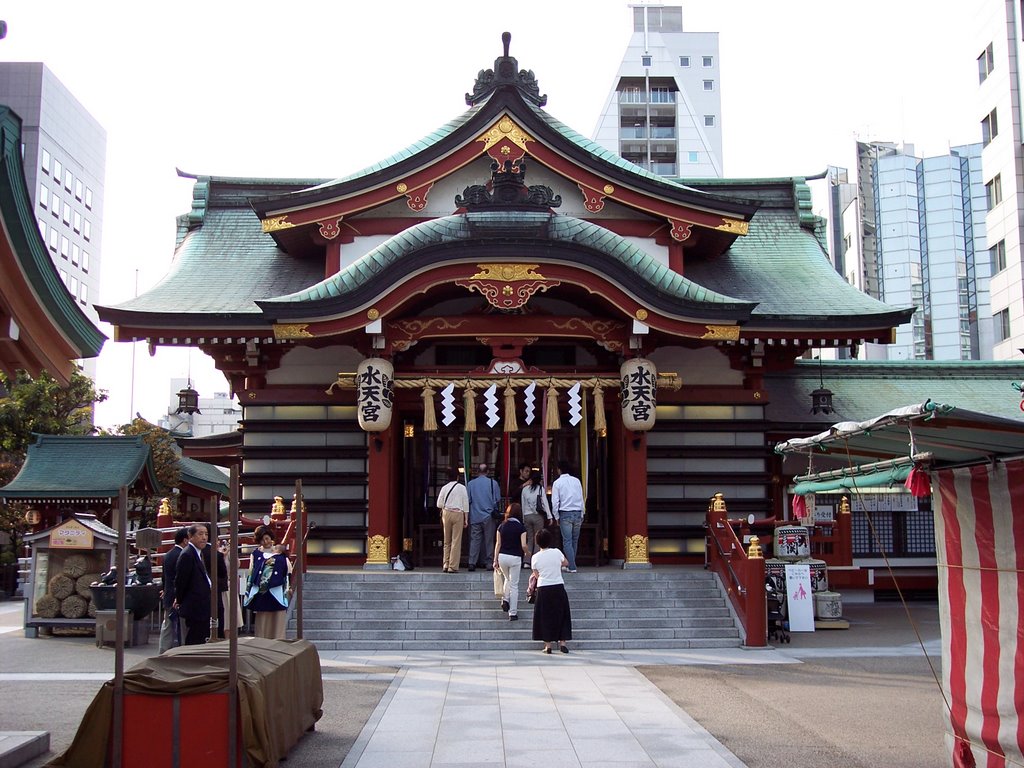
Asakusa's highlight is Sensoji (Asakusa Kannon), Tokyo's oldest and most famous temple. While it is packed with tourists, it is still quite a sight to behold, especially coupled with some browsing in the stationery and kimono shops and some tasty treats from the street vendors.
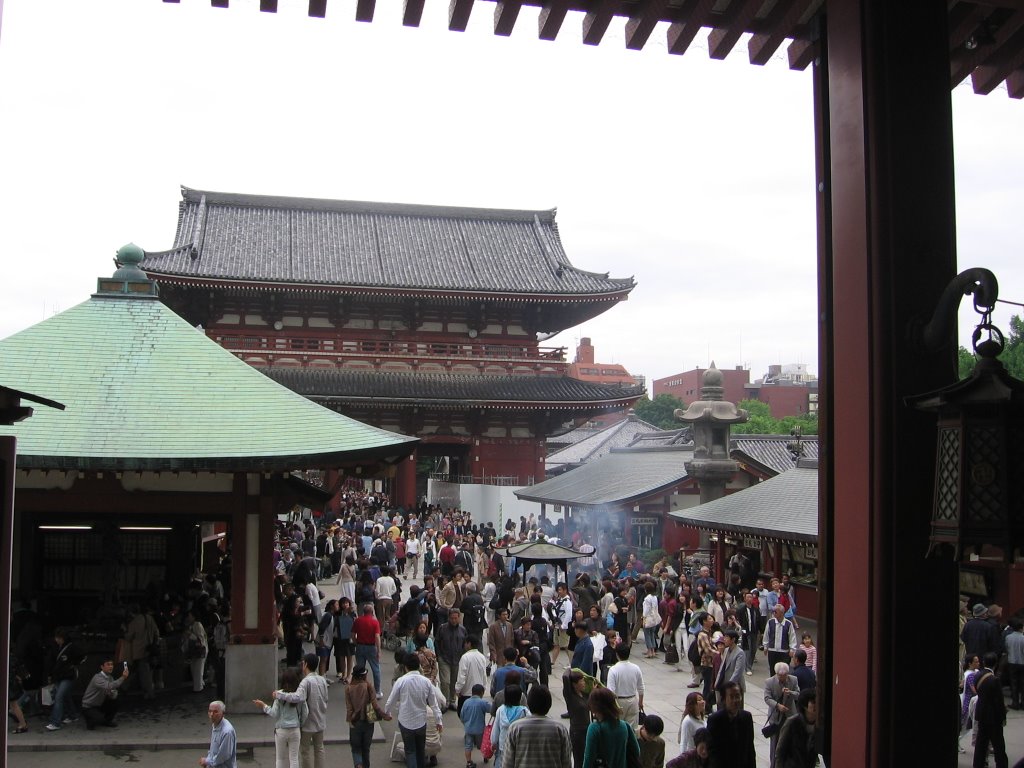

The Hozomon main gate to Asakusa Kannon
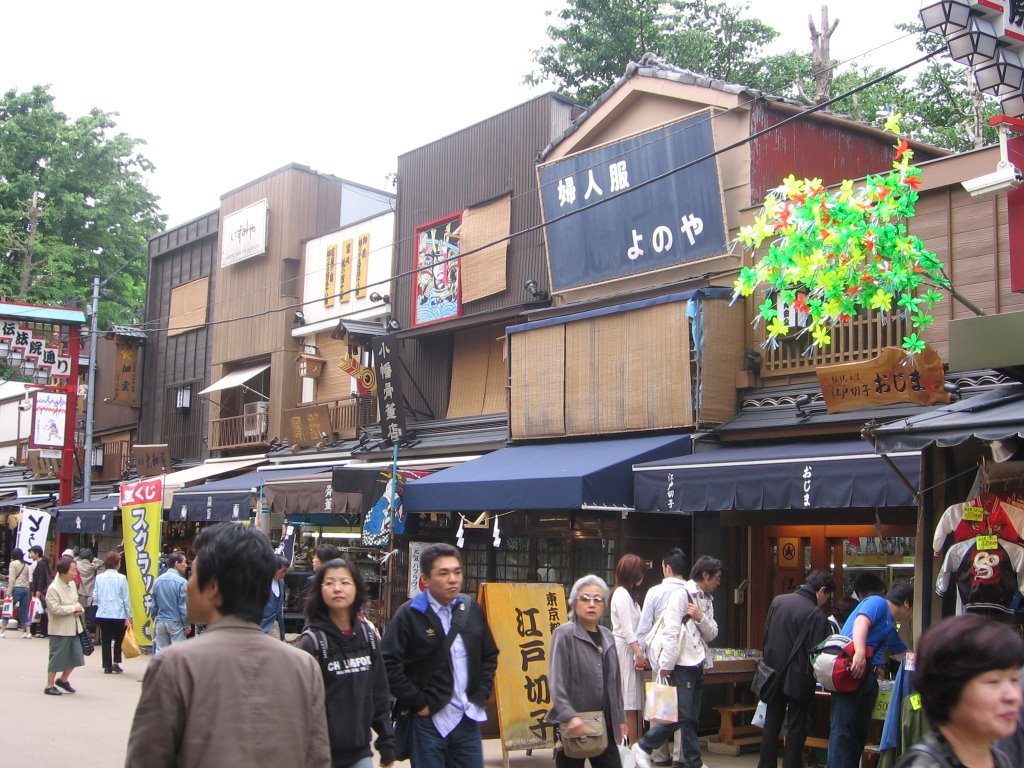
Old Tokyo buildings in Asakusa

Another view of Asakusa Kannon

Vendors in Asakusa sell candy apples, candy grapes, candy strawberries...
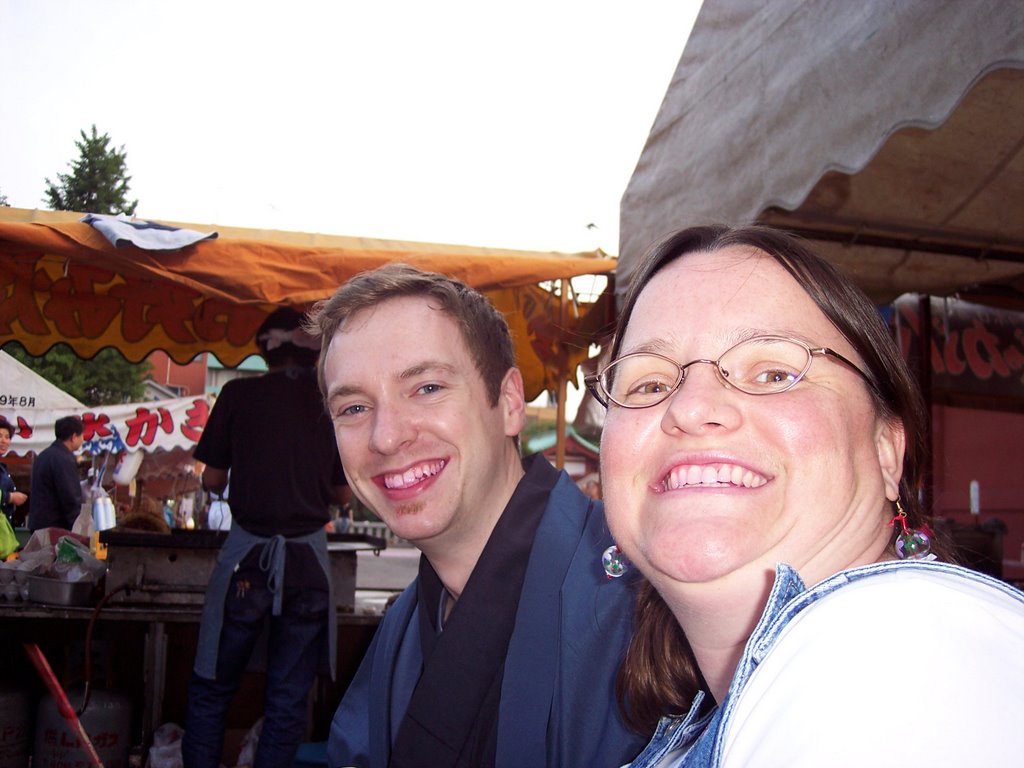
They tend to give you a perfectly pink smile, like so.
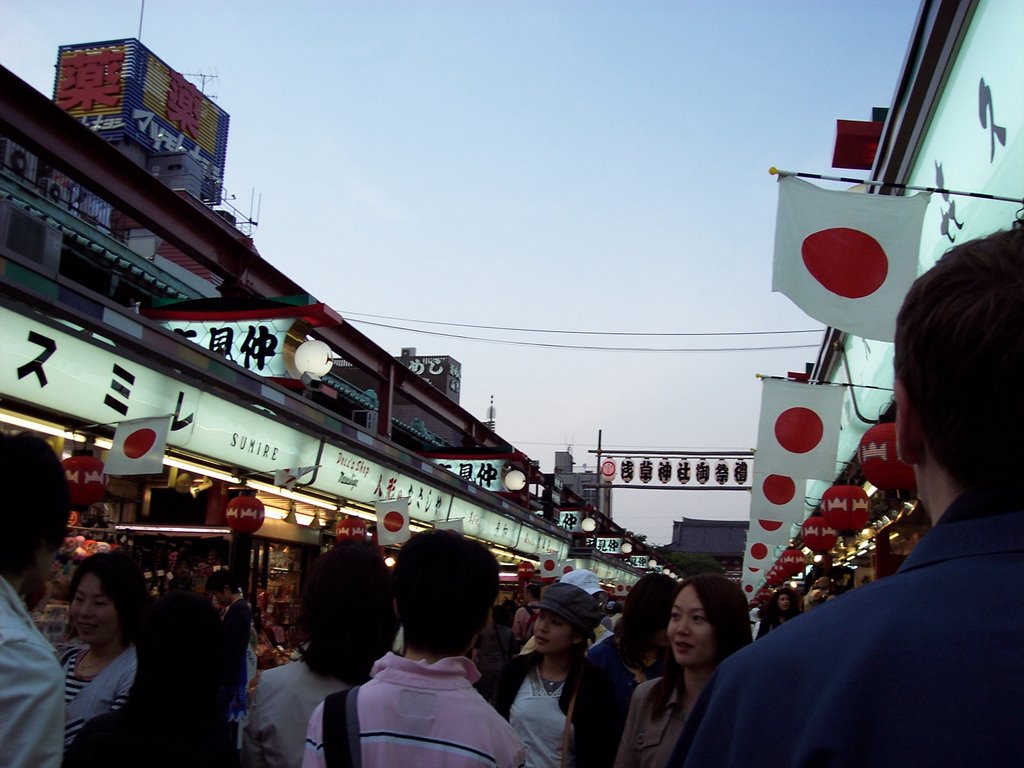
One of the packed shopping streets


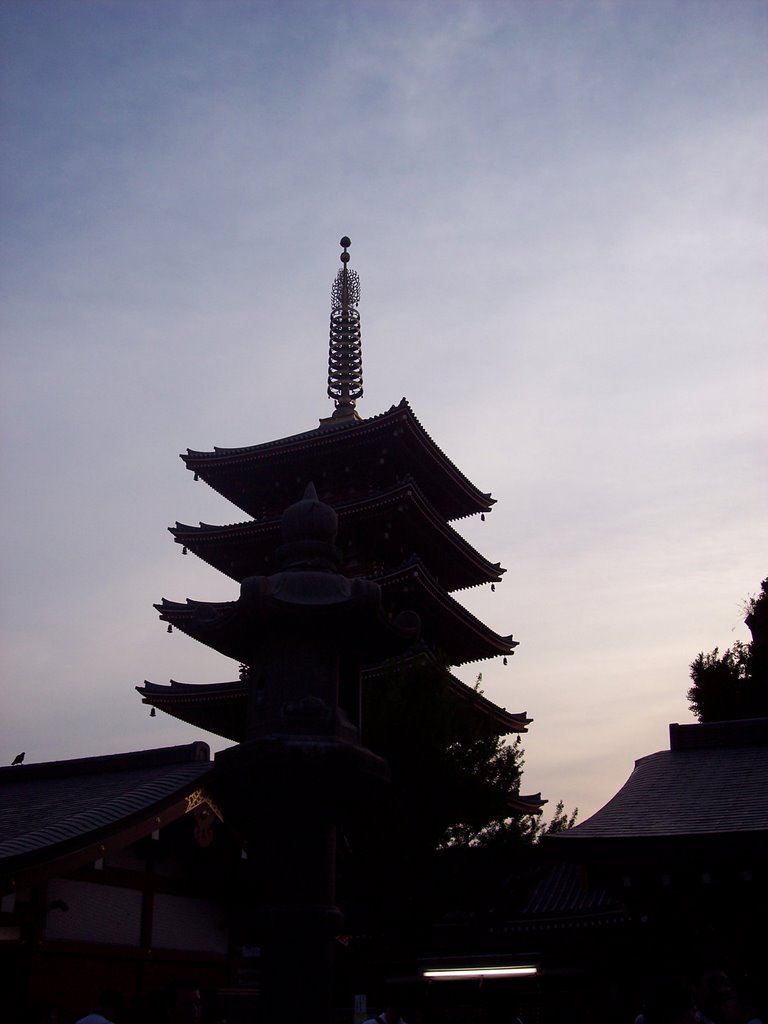
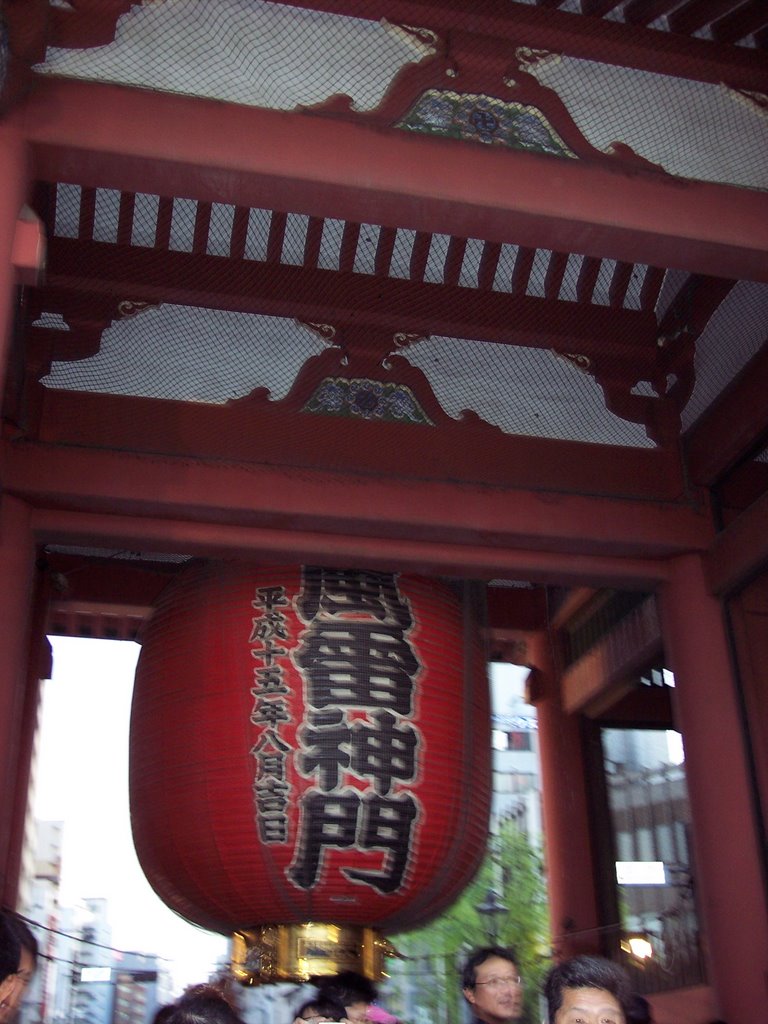
A pagoda at the complex and the famous lantern at the Kaminarimon, the outer gate to Sensoji

Labels: , ,

Saturday, April 29, 2006

Gorgeous Kiyomizudera

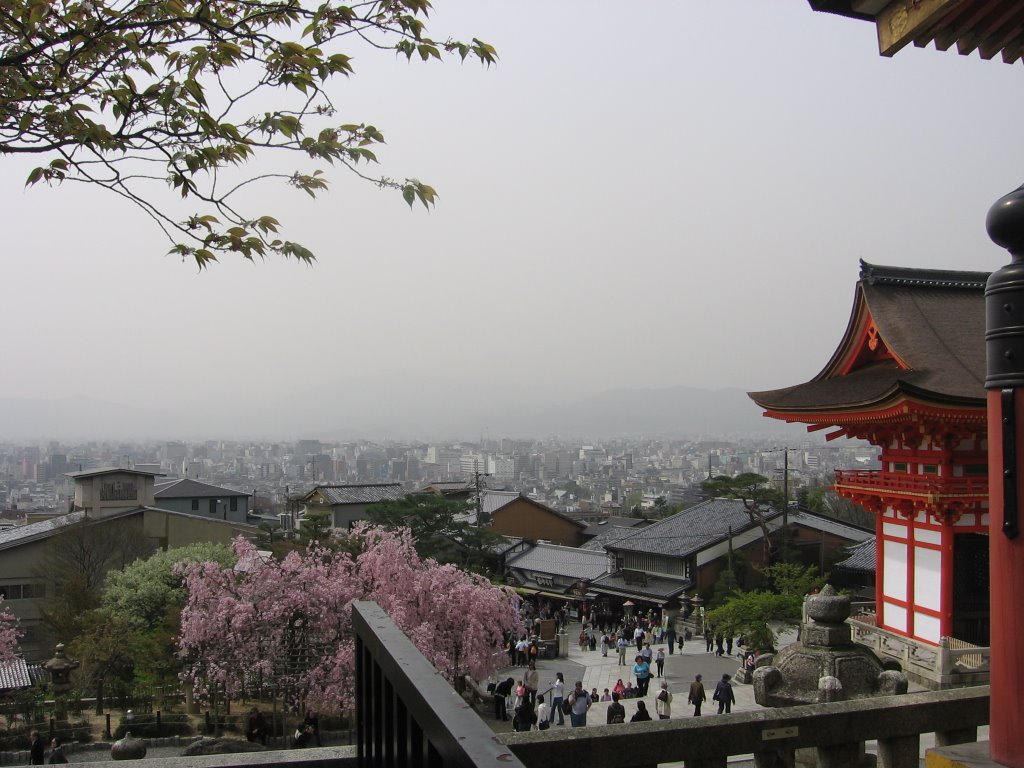
Kiyomizudera is without a doubt one of the best temples that I have seen in Japan. High in the hills of Kyoto and surrounded by little crafts and pottery shops and delicious yuba tofu restaurants on the way up, Kiyomizudera is named for the "pure water" you can catch as it trickles down from a tiny waterfall at the base of the temple complex. You can see all of Kyoto from the terrace, including the woods below. All in all, a perfectly charming place to visit and a definite must-see in Kyoto.


Labels: ,

Monday, April 24, 2006

Silver and gold

There are two interesting pavillions in Kyoto: Kinkakuji (the Golden Pavillion) and Ginkakuji (the Silver Pavillion), both on opposite sides of the city. Kinkakuji is a very ostentatious 1955 replica of the 1397 original, which was apparently burned down by an angry monk in 1950. The arsonist apparently "hated anything beautiful." So many lovely things in Kyoto were ruined by jealous, angry, or violent monks, according to my guidebook. People were afraid of the monks who lived in the mountains and hills surrounding Kyoto for all of their craziness: kind of contradicts the idea that we have of monks being so peaceful and Zen-like, eh?

Kinkakuji was nice, but kind of gimmicky, with tons of schlocky souveniers and model golden pavillions sold alongside tons of overpriced okashi (sweets) and other useless items. It was a very pretty place, but marred by an abundance of tourists and mindless consumerism.


The trail leading to Ginkakuji is called the Philosopher's Path, which is lined with hundreds of sakura trees and follows a pretty little canal as well. Dozens of little teahouses, craft shops, and fabric stores can be found along the Walk of Philosophy. Such a lovely stroll that was unfortunately marred by a freak rainstorm on our first day in Kyoto. We ducked into a shop for a matcha (green tea) float and watched the rain patter on the wooden porch. Fortunately, we returned a couple of days later in order to finish our journey to the Silver Pavillion.


Ginkakuji actually isn't silver, but its gardens of tiny pebbles do give off a silver hue in the moonlight apparently. While they intended to cover Ginkakuji in silver leaf (as was done to Kinkakuji in gold), they never got around of it, so while the actual temple isn't all that impressive, the peaceful and mossy grounds of Ginkakuji are gorgeous, particularly when enveloped in filtered sunlight and viewed from a short climb in the hills. I have to say, I loved this place for its serenity and simple, understated beauty and deference to nature.


And yes, some moss is definitely more important than others... We visited Ginkakuji's VIP lounge, filled with different varieties of the moss that covers the grounds of the pavillion, so that even in winter, one will be able to catch a glimpse of the verdant green flora. I am so lucky to visit Kyoto during sakura season, but I couldn't help but be wistful, and hope someday to return to Kyoto during my favorite season -- autumn -- and see the fiery Japanese maples alongside the lush moss, sculpted tree bark and gorgeous architecture. Marvelous!

Oh, how I loved Kyoto! There was a fantastic surprise around every corner, be it a cheap little gift shop with gorgeous wares, a friendly stranger ready and willing to compliment my strained attempts at Japanese, free samples of delicious crepes and cinnamon cookies, a charming apartment, a secluded temple ... Kyoto is everything that you dream that Japan will be like -- and more! Those who know me will know that I don't give such bountiful praise lightly, so please take that for what it's worth. More to come.


Labels: ,

Wednesday, April 19, 2006

Geiko in Kyoto

Definitely was trying not to get my hopes up about seeing geisha (芸者) during my visit to Kyoto a couple of days ago, but I was not disappointed! We were able to see geiko (芸妓), as they are called in Kyoto) on their way to appointments during the early evening in the Gion district, the most famous geiko area in Japan. In this district, the streets are very quiet and dark save for the orange lanterns in front of the exclusive teahouses where the geiko shuffle to meet patrons for entertainment (tea, drinks, dancing, shamisen playing and the like).

A couple of days later, when visiting Kiyomizu temple high in the hills of Kyoto, we were able to get up close and personal with some maiko, (
舞妓) apprentice geiko which are exclusively found in Kyoto. Once maiko finish their training, they must decide whether to take the next step to become a geiko, which means giving up on marriage. In order to differentiate a geiko from a maiko, you must examine their clothing. Maiko wear much more flamboyant kimono with longer sleeves, while the geiko don kimono with a more subdued white collar. My goal was to get a good photo with the temple in the background and a close up of their makeup, while many annoying Americans and Europeans wanted to "pose with the geisha." Even while being accosted with cameras, these maiko still maintained their grace and poise, still shuffling about while people shouted at them and followed them down the winding road away from Kiyomizu.


It was very exciting to encounter so many geiko and maiko when every guidebook that I read warned that spotting geisha is a rare occurence in modern-day Kyoto, as their numbers have been fast dwindling since their peak in the 1920s.

Labels: ,

Tuesday, April 11, 2006

See my Nikko; hear my Nikko; I speak of Nikko

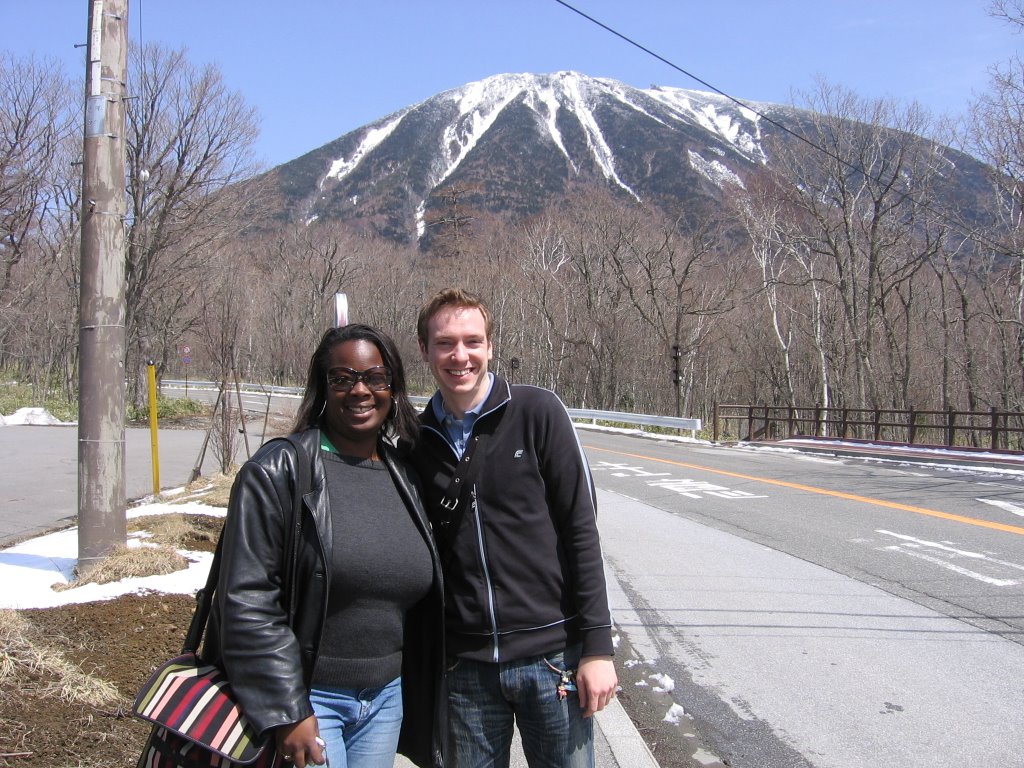
Spent a weekend in Nikko which was absolutely fantastic. While the weather in Tokyo has been warm (despite the sudden influx of neverending rainy days), in the mountains of Nikko, there was actually snow on the ground! This led to random snowball fights and other such wackiness. We stayed in a traditional Japanese ryokan (旅館) with tatami floors and comfy futon to spread out and sleep on. The ryokan also had its own onsen for guests to bathe in. It was a great place to stay, and very close to the UNESCO heritage sites, such as Toshogu Shrine. We spent the first day exploring Toshogu, Tayuinbyo, Rinnoji, and Futarasan temples and shrines and the second day wandering above the main city, exploring waterfalls and mountains and the area around Lake Chuzenji. From photos, I could see that Nikko is absolutely breathtaking in autumn, but it was still beautiful at mid-spring as well (though I was surprised by the snow, because it didn't seem that cold!).


Here are two of the waterfalls that we viewed. The one on the left is the Kegon, which is about 97-meters tall.


See the stupid-looking monkeys? They're the inspiration for that "See no evil, hear no evil, speak no evil" crap. Nikko would be bereft of cheesiness if it weren't for these monkeys. Now as a result, all the tchotchke shops sell a million things with these monkeys on them: Hello Kitty as a monkey, cartoon versions of the monkeys ... soaps even! The monkeys are carved on a stable at Toshogu that is supposed to house a white horse, but no white horse was to be seen. There are also supposed to be wild monkeys at the waterfalls as well, but alas, I was not lucky enough to see one. Ripoff! Kidding, kidding. I was able to see one animal though. The lovely Sakura, pictured right.


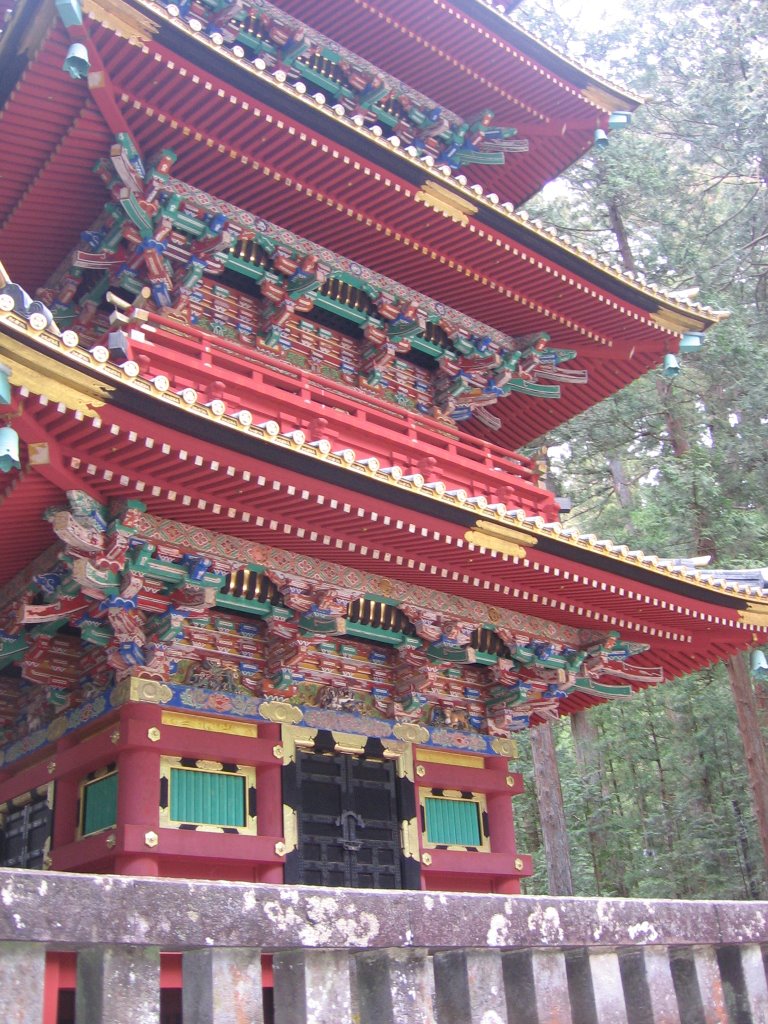
Here are some photos of the temples and shrines we saw at the UNESCO complex at Nikko. Unlike the majority of the temples in Japan, the Nikko temples are heavily influenced by Chinese architecture, which is why they look similar to some of the photos I took in Singapore and Malaysia


Who said that temples have to be boring? At Futarasan, there is a ring toss game, where the object is to ring one out of three in order to have good luck. These ladies were extremely serious about the game and kept cutting the line to take more and more turns. I ringed one though! There was also a game where you spun a wheel to get one of about eight different pastries. You didn't get to eat the pastries (they were plastic) but each of the desserts represented a different fortune. Unfortunately, I got a cookie of some sort that apparently represents abunai, which basically means danger. Great.

Highlights of the trip included the stunning temple complex and the fun viewing of all the waterfalls and two interesting restaurants. Enya Beer Restaurant featured all-you-can-eat shabu shabu for 1,800-yen (about $16) and a Belgian beer list! Hippari Dako had thousands of meishi (namecards) collected from visitors and a particularly friendly little boy who likes to show-off a sampling of English phrases and draw pictures of the patrons. Lowlights included a crowded onsen and a vomit- and headache-inducing bus ride down the mountain. Good times!


[Credit: Top photo by Keatley.]

Labels: ,

Wednesday, April 05, 2006

Dirty money?

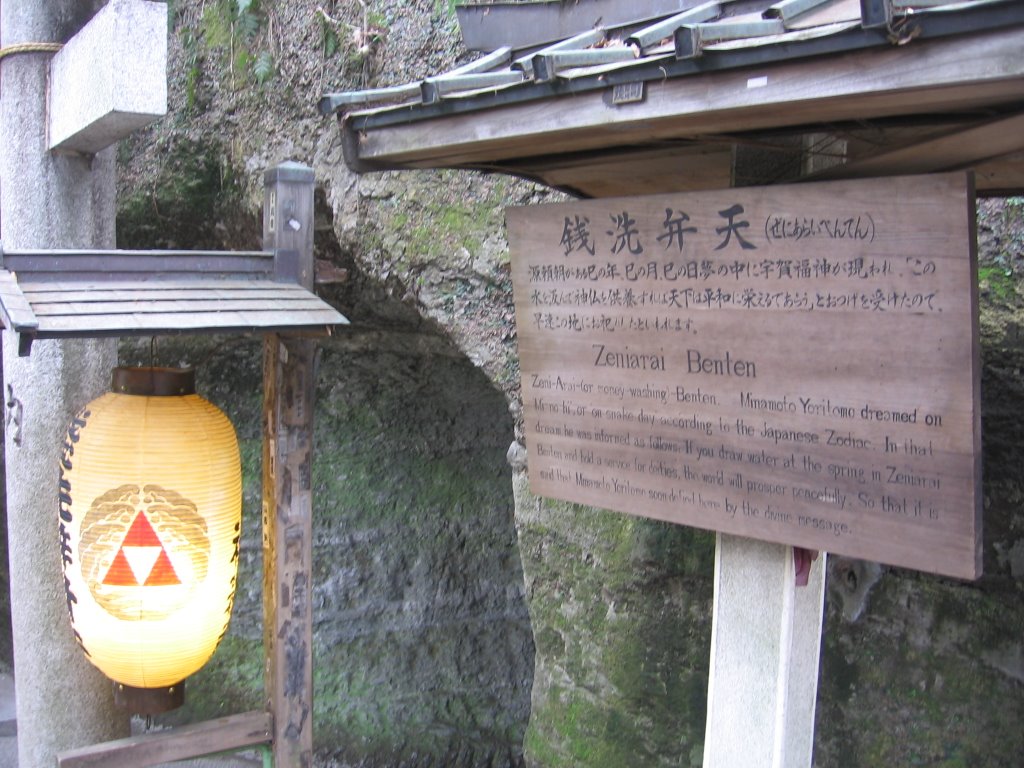
I was always taught that money was the dirtiest thing ever since the day I was caught with a penny in my mouth at age two. Well, there's a shrine in Kamakura where you can give your money a good washing! It's called Zeniarai Benten, and the legend has it that the money that is washed there will double. This place is fantastic. Not your typical temple or shrine, that's for sure. It's apparently one of the most popular shrines in Kamakura.

According to one website, the shrine was founded "on the day of the Serpent, the month of the Serpent in 1185, the year of Serpent on lunar calendar based on twelve zodiac signs." So there are serpents everywhere and you can buy eggs and sake to offer to the serpent god who lives in the shrine.

The site continues: "'Wash money with sacred water and spend it clean.' It's money laundering in Japanese fashion. Oddly enough, two-thirds of those who visit here are women, according to a survey conducted by a magazine publisher. Dose [sic] it mean that women are greedier than men? On the other hand, there are a handful of devout worshipers, mostly merchants, who deeply revere the Shrine and wash bundles of 10,000-yen (roughly US$80) bills."

Here is one of the side shrines where you can purchase the eggs and sake. Zeniarai Benten was such a festive place, with monks chanting in one area and folks making offerings at small statues of serpents and of course, the festive atmosphere at the money-washing area of the shrine.


Zeniarai Benten is quite a bit away from the main attractions of Kamakura, but a scenic hiking trail leads you right there.


Here's where the magic happens. You grab a basket, put your yen in (I put a 10,000-yen note in the basket) and ladle the water over the bills. The sign that notes "Dries naturally" is there to discourage people from attempting to dry their money over the nearby incense burners, as I'm sure many have done with disastrous results. Not likely to double your cash that way, that's for sure!

Labels: ,

Tuesday, March 28, 2006

The interminable transport (and terrific onsen!) of Hakone, Japan

TUJ was good enough to subsidize a trip for the class to visit Hakone, which is a two-hour train ride from Tokyo and famous for its mountain views and hot springs, and in my opinion, infamous for its tricky transportation situation. The day consisted of a crowded two-hour train ride to Hakone, a 40-minute slow-moving train which moved back and forth to get up the mountain. Usually I like the recommendations of the online Japan Guide but it is neither a "spectacular mountain train line" nor a "treat."

After the treat, we went on cable car rides totalling another 20 minutes, followed by a half-hour ride on a pirate ship (yes, a pirate ship) and another 20 minute bus ride back to the train station for the two-hour ride back home. Yup. So if anyone is planning on doing a trip to Hakone, I would recommend staying overnight or just not going at all. While many of the sights were pretty, there was nothing there that absolutely took my breath away, though perhaps it was because it was a kind of cloudy day when we visited.

First stop was Odawara Castle, which was originally built in 1495, but reconstructed only in 1960. Thus, it's a little disappointing and antiseptic inside, with a yawnfest museum with old armor, weapons, clothing, and the like. On one of the floors are photos of all the castles in Japan, which was a bit disheartening to see other castles that were probably nicer than the one you were standing in! The top floor had an observation deck that would have been interesting if they hadn't decided to erect a photography inhibiting fence for safety's sake. Yeesh.

Thank goodness it's sakura (cherry blossom) season, so the presence of the beautiful trees really redeemed what could have been a pretty disappointing visit. I've been able to take so many beautiful shots of the sakura so I will save my further descriptions for yet another post. And yes, that is in fact a real elephant that shares a home on the grounds of Odawara Castle with some peacocks and other exotic birds. Very strange. You could also rent kimono or samurai costumes. Check out these happy guys in their Triforce samurai get-ups! I was pretty amused to find the Triforce symbol on everything at Odawara Castle, but later found out that it is based on the symbol of the Hojo clan, which claims that the triangles represent the scales of a Shinto dragon.


After the cable car ride, we visited Owakudani, the home of the hot springs, where the air smells faintly of rotten eggs due to the sulphur emanating from the mountainside. Capitalizing on the smell, you can visit the food vendors outside of the cable car, who sell hard boiled eggs that have been cooked in the hot springs. Because of the mineral content of the water, the shells have turned black, but the egg ... well, it tastes like a normal egg. But it is said that the eggs are supposed to extend your life by seven years, so I had to give it a shot. I only ate half an egg, but 3.5 years ain't bad either, I guess. The area around Owakudani can be seen below. While it is said that you can see Mt. Fuji on a clear day from the lookout spot, it was cloudy, so alas we did not get our view of Fuji-san, as they call it here in Japan. We saw a faint outline of Fuji-san when we took the ride in the pirate ship, so it was gratifying to get at least a little taste of what the large mountain looks like!


Our ship awaits! It started to get really windy at this point, so it was nice to sit below deck like a true landlubber and keep warm. Wow, I really am sounding cynical, ain't I, mateys? Yarrr!


But wait! Thar it is, the faint outline of Fuji-san! See it, there!


By far the best part of our visit was a trip to the onsen (温泉), the public hot springs bath. Hakone is known for its onsen due to the volcanic activity, which naturally heats the water. Onsen are very popular in Japan, and while I was a bit shy to walk around and bathe stark naked, it was definitely a terrific experience. (And yes, the onsen is segregated by gender!) The onsen we visited had an indoor hot tub, a sauna, two individual hot bubbling baths outdoors and a larger outdoor jacuzzi-type bath as well as a cooler bath and a bench for lounging between dips.

There is a strict regimen at the onsen. First, you take your shoes off and place them in a locker. Then you buy your ticket for the baths and collect your towel and get a key to another locker. That's where you strip down! If you think this is when you jump right into the baths, you are wrong. The Japanese scrub themselves clean before heading into the water, so there are individual stations for soaping down, lathering up, and scrubbing away. It is only after completing the cleaning ritual that you can hit the tubs. It was an incredibly relaxing experience to sit outside in the hot water and breathe in the mountain air and it (almost) allowed me forget the hours of the day spent on some form of transportation or another.

Labels: , ,